IPTV vs. Cable in Canada: An Honest Comparison (2026)
Between a cable or satellite package, a sports add-on and a couple of streaming apps, the average Canadian TV bill climbs fast. IPTV promises all of it for much less. But what do you gain, and what do you give up? Here is a straight comparison.
Price: the real difference
A basic cable or satellite package in Canada can look cheap at first, but the price rarely stays there. Add a sports pack, a movie pack, a box rental for a second TV, the regulatory fees, then one or two streaming apps for the series everyone talks about, and many households end up well above $100 a month, before tax.
An IPTV subscription bundles live channels, sports and an on-demand library into one plan. With Canada IPTVV, the 12-month plan works out to $7.50 a month, paid once, in Canadian dollars. See all IPTV prices.
Contracts and promotions
TV providers love a promotional price for the first 12 or 24 months, tied to a contract. When the promotion ends, the bill jumps, and leaving early can cost you. An IPTV plan like ours is a one-time payment: no contract, no automatic renewal, no price hike after the first year. When it ends, you renew only if you're happy.
Equipment
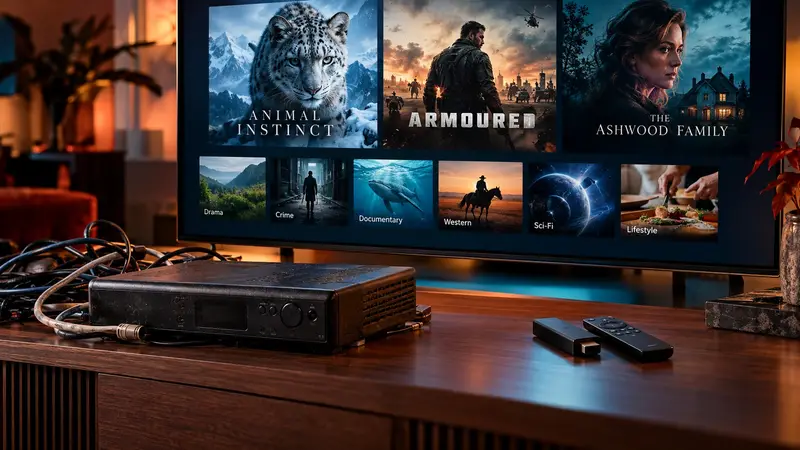
Cable and satellite TV need a set-top box for each television, often rented month after month. IPTV works with an app on devices you probably already own: a Fire TV Stick, a Samsung or LG Smart TV, an Android or Google TV device, an Apple TV or iPhone, or your laptop. So you can watch in the bedroom, at the cottage or on the road.
Channels and languages
This is where IPTV pulls ahead for many Canadian families. Cable charges extra for each language pack, but a good IPTV service includes English-Canadian, French-language and US channels alongside thousands of international channels: Punjabi, Hindi, Cantonese, Mandarin, Tagalog, Arabic, Italian, Portuguese, Spanish and many more. Browse our channel categories.
Picture quality and reliability
This is where cable has the edge. It runs on the provider's own network and is very stable. IPTV depends on your internet connection and on the quality of the provider's servers. With fibre or a good cable internet plan, a recent device and a serious provider, the difference is small. Check our guide to the internet speed you need for IPTV.
Time zones
Canada spans six time zones. A good IPTV TV guide follows the time zone on your device, so listings match your clock from Victoria to St. John's, and catch-up on many channels lets you watch an east-coast game from the start when you get home on the west coast.
The bottom line
- Stay with cable or satellite if you watch very little TV, the basic package is enough for you, and you have no reliable internet.
- Switch to IPTV if you want sports, movies, series and channels in your language without stacking subscriptions, and without a contract.
The best test is at home, on your own TV and internet. You can also ask for a free 24h trial before you pay.
Frequently asked questions
Do I need to keep my internet plan for IPTV?
Yes, IPTV runs over your internet connection, so you keep your internet plan. But you can usually cancel the TV part of your bundle and save.
Does IPTV work with every Canadian internet provider?
Yes. IPTV simply uses your internet connection, whatever your provider, on fibre, cable, DSL, fixed wireless or 5G home internet.